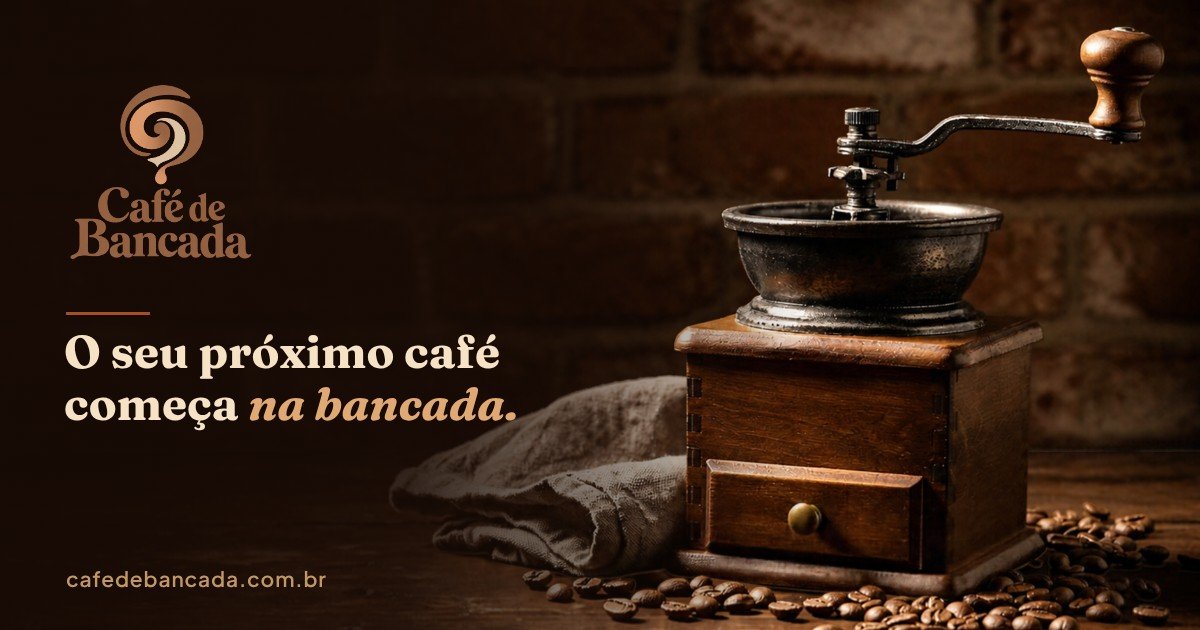
Café de Bancada (roughly “counter-top coffee”) is a Brazilian review and buying-guide site for home coffee equipment: grinders, brewers, scales, kettles, specialty beans and espresso machines. It earns money through Mercado Livre and Amazon affiliate links.
The most important part of the project happened before the site existed: choosing the niche with data instead of gut feeling. It is the same reasoning I use in Power BI dashboards, applied to a business of my own.
1. The scraping: where the data came from
I used Apify for automated extraction from the marketplaces and Ubersuggest for a first check of Google search volumes.
Mercado Livre
Mercado Livre is Latin America’s largest marketplace. Its official Mais Vendidos (bestsellers) page blocked automated reading, so I changed strategy: I searched the 6 key terms directly and excluded sponsored listings, which distort any analysis of real demand. For each of the 267 organic listings I kept:
- price in R$ (Brazilian reais);
- units-sold bracket (
1,000+,5,000+,10,000+,50,000+); - number of reviews and average rating.
Amazon BR
On Amazon Brazil I collected the bestseller ranking in 6 categories: position, price, number of reviews and rating. Amazon does not show sales volume, so here ranking position and reviews act as the demand signal.
Commissions and searches
The commissions estimated in the brief ranged from 8% to 16%, and were later checked category by category in the affiliate dashboards. Ubersuggest showed whether there was enough organic search to support content.
2. The first filter: what was left out
Before reaching the finalists, I dropped products that were too competitive or too cheap to justify editorial work: generic kitchen scales, car phone holders, jump ropes, air fryers and cleaning products from big brands. In those cases either large retailers own the search results, or the commission per sale does not pay for the content.
3. The 6 finalist micro-niches
| Micro-niche | Category | Examples found | Strength |
|---|---|---|---|
| Biodegradable cat litter | Pet | Viva Verde 4 kg at R$ 67.39; Pipicat 12 kg at R$ 38.90 | Monthly repeat purchase |
| Disposable dog training pads | Pet | Petlike 30 pcs at R$ 52.65; Blue Premium 30 pcs at R$ 65.90 | Monthly repeat purchase |
| Automatic pet water fountain with refills | Pet | Newpet stainless fountain 3.2 L at R$ 128.89; 4-filter kit at R$ 22.20 | Repeat purchase on filters |
| Concentrated car shampoo and wax | Automotive | Vonixx V-Floc 1.5 L (5,271 reviews); Tok Final 500 ml (2,403 reviews) | Many reviews |
| Manual coffee grinder Chosen | Kitchen / Coffee | Compact stainless model at R$ 63.07 (10,000+ sold, 2,492 reviews); espresso model at R$ 47.22 (5,000+); wooden model at R$ 65.61 | Gateway to a whole ecosystem |
| Socket and ratchet sets | Tools | Vlx 46-piece kit at R$ 28.83 (50,000+ sold); Black Tools 1/2" at R$ 116.10 (50,000+) | Very high sales volume |
On paper, the pet niches had the strongest argument: repeat purchases. Tools had the highest sales volume. Even so, the coffee grinder won.
4. Why coffee won
An ecosystem with a rising ticket
A niche built on a single consumable stops at the first product. The manual grinder, instead, opens a whole path: it starts at R$ 47–65 for entry-level models, goes through specialty models such as the Timemore C3, and leads naturally to brewing methods, precision scales, gooseneck kettles and espresso machines, where the ticket reaches R$ 600–4,500+. These are accessories and appliances with full commission, unlike food consumables.
Winnable SEO and clear buying intent
Pet supplies and generic tools are dominated by big retailers or have thin margins. Home specialty coffee, on the other hand, generates very specific informational searches, where a well-made technical guide leads straight to buying the equipment:
“cafeteira francesa” (French press): 12,100 searches/month
Passion and real know-how
I grind fresh coffee every day. I already knew the technical criteria that really matter (conical burrs, grind size, brew ratio, boiler versus thermoblock, 127V/220V voltage in Brazil). That lets me write genuine product sheets instead of copying generic listing descriptions, and that is exactly what makes a review site trustworthy.
5. How the site is structured
The home page follows the coffee ritual itself, in the “Do grão à xícara” (from bean to cup) section: four steps that become the catalog categories.
A fifth category, Espresso Machines, tops off the price path. On top of that:
- Product sheets (“fichas de bancada”): 17 selected products, each with a badge (such as “Best Value” or “Counter Classic”), suggested brewing methods, specs, What we like and an honest Watch out point.
- No prices on the site: prices change all the time, so every sheet links straight to the offer on Mercado Livre and Amazon. If one of the links does not exist for a product, its button simply does not appear.
- Guides: articles such as “How to choose your first home espresso machine” or “Coffee scales: why weighing changes everything”, each with a Nota de Bancada, a practical tip box.
- Data and tech: TanStack Start front end built with Lovable, reading categories, products and articles from a Supabase (PostgreSQL) database with public read-only access. Sitemap submitted to Google Search Console and a custom share image for WhatsApp and social media.
6. The visual choice: rustic and warm
Appliance stores usually look cold: white background, blue, price tags. I wanted the opposite. Home-brewed coffee is a slow, hand-made ritual, and the site had to convey that, as the home page itself says: “Para quem leva o café a sério. E com calma.” (for people who take coffee seriously, and take their time).
#FAF6F0cream, the background
#A74E27copper, buttons and highlights
#2F1A0Eroasted coffee, the text
#1D0F08dark coffee, secondary buttons
Do grão à xícara.
Fraunces · headingsEquipamentos bem escolhidos, métodos sem mistério e o prazer de fazer um café que é só seu.
Plus Jakarta Sans · body text- A roast palette: cream, copper and dark browns, the colors of the bean, the copper kettle and the wood.
- Typography with character: the Fraunces serif, with expressive italics in the headings, against a clean, readable sans for the body.
- Counter-top photography: wood, brick, warm side light and scattered beans, like the cover of this post.
- Brand: a spiral logo in coffee and copper tones, repeated in the footer and in the Notas de Bancada.
The result feels more like a coffee magazine than a price comparison site. That is what earns the reader’s trust to click through to the offer.
What I take away from this project
The niche with the most sales (tools) and the one with the most repeat purchases (pet) did not win. The winner combined proven demand, a path of rising ticket sizes, winnable organic search and real knowledge from the person writing. The data narrowed the options; judgment made the final call.
See the result live.
Visit Café de Bancada ↗